
Ultimate Parent Guide to Starting Childcare
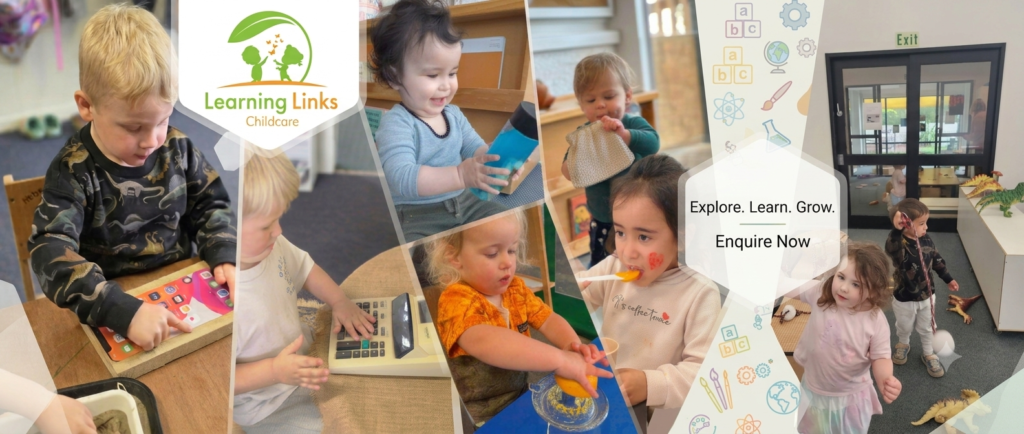
Written by: Learning Links Early Childhood Educators (Last Updated: August 2026)
Starting childcare can be a big but exciting moment in your child’s life. Up until this moment, you’ve spent pretty much every day together, and now you have to take a step back and trust your baby with someone else. But that trust is worth it, your child will be able to have incredible experiences and continue to grow and learn in a safe and supportive environment. That’s what this guide is here for, to walk you through how to pick the right child care center for your family and your child, how to prepare before starting, what your first day of child care will look like, and then what to expect in the first few weeks.
How to Pick the Right Centre
Picking the right centre matters because it’s where your child will be spending a huge part of their week, so it’s worth taking the time to find one that’s actually a good fit. There are three things you’d look at when deciding which childcare center aligns with you:
Ratios- The legal minimum is one adult to three children for under twos, and then one adult to ten children for over twos. There should be at least two adults on-site at all times. And fifty percent of those staff counted in the ratio should be ECE qualified. This is the number that decides whether a teacher actually has time to notice your child is tired, upset, or just needs a cuddle, rather than just keeping the room running.
Curriculum and Quality- Every licensed service provider must deliver Te Whāriki, which is the national ECE curriculum, and every center must hold a current ERO report. So you can ask to see this. This is what shapes what your child’s day feels like, whether they’re getting real experiences that light them up, or just being minded until pickup. Within the curriculum, it’s good to identify what their core values are and how they implement this. Are they focusing on nature, connection, learning, play? How is this implemented?
Arrange a visit- This is so important because it lets you experience what it’s like in a normal day in that childcare center. Here’s what to ask while you’re there:
- What percentage of staff are qualified?
- How do you handle settling in and separation anxiety?
- How do you communicate and share the day with parents?
The main thing you’re trying to do is find a place that suits your child and yourself because confidence is the most important thing.
How to Prepare Before Starting
2 Changes of clothes, Socks, Underwear, Formula, Diapers, Water Bottles, Blanket, Sunscreen, Hat, Approved medication, Allergy action plan,
When it comes to preparing to start childcare, the first step would be enrollment. You need to contact the service to confirm their own process, as this can vary, but you’ll need proof of your child’s age, citizenship, and immunisation records from the well-child book. Then, typically, the centre will arrange for some settling visits, which is a series of smaller visits with you and your child together before your official start date. Typically, the first one’s pretty short, and then each one gets a little bit longer each time. This is a way of bridging the gap between home and centre so that you can help ease the transition for your child.
Then before the first official day, you’ll need to think about what you’re going to pack in their bag:
- Drink bottle
- Sun protection, such as sunscreen and a hat
- Spare clothes
- A labeled bag for soiled clothes
- A comfort item from home, like a dummy or soft toy
- A sleep sack or swaddle, if they use one
- Most childcare centers will provide food and nappies.
Then before you start childcare, it’s really important beforehand at home that you talk it through with your child, helping to explain what childcare will be like in a positive and matter-of-fact tone. They will pick up on the emotional tone more than what you’re saying but it helps to set an expectation and build a positive association.
What the First Day of Childcare will look like
For the first day, you’ll want to arrive with extra time rather than rushing in the morning making sure you allow time to do the drop-off without a rush. This helps both you and your child settle before the goodbye and creates a positive experience. Take your time hanging out in the room together for a little bit.
For the actual goodbye a brief consistent routine of two to three steps is highly recommended, so you would want to repeat the same thing every day. This works a lot better than lingering and hanging around, or sneaking out. Over time, these two behaviors, lingering or sneaking out, can actually increase your child’s vigilance and clinginess because it means they can no longer predict when you’ll leave, and that makes them more anxious and nervous which is harder on both of you. So just keep a simple, short goodbye routine every time, and it will get easier.
On the first day, you wanna make sure you provide the comfort item, something familiar, a piece of blanket, a small toy, anything to make that first few drop-offs a bit easier. You also want to set very clear expectations. Tears at drop-off on day one are expected. It’s not a sign that the placement is wrong. It’s just a natural reaction so try not to stress too much.
What to Expect the First Few Weeks
Walking out and saying goodbye is the hardest part, but once you’ve left, usually within a few minutes, your child is settled, and they are happy. So trust the process.
Most children will typically settle into this routine within one to four weeks, though it’s rarely a straight line. For a lot of families, this stretch feels harder than expected, and that’s just your child’s attachment to you doing exactly what it’s meant to do. There’s a lot going on for them all at once, new routines, new people, real time away from home. A lot of kids seem totally fine in the first day or two, even excited, and then once it stops feeling new, that’s when the rollercoaster of emotions tends to show up. You might notice them coming home more tired, fussier, or needing extra reassurance, and some kids will cry at drop-off or resist going in. All of this is a natural part of adjusting, not a step backwards.
You can tell it’s all going okay if they’re happy at pickup, and eating and sleeping reasonably well. Over time they start forming real relationships with the other kids and their teachers, and those relationships are what actually build their confidence and sense of security, even when the progress along the way doesn’t feel like a straight line. The same predictable goodbye routine that helps on day one will also be helpful through the settling-in period.
Research from the Early Childhood Development and Care Journal found that separation anxiety shows up in almost all toddlers starting childcare, but most will settle within a few minutes of a parent leaving on any given day.
Starting childcare is a big step, but you’re not figuring it out blind. There’s a real system behind it, ratios, curriculum, and review, and once you know what to check for and what to expect, that trust gets a whole lot easier to give. Before long, drop-off will just be part of your rhythm, and you’ll get to watch your child grow, make friends, and build new skills everyday!
FAQs
Q. 1- How many settling visits will we need before starting?
It varies by centre and by child, but most families do a couple, starting short and building up each time. If your child’s finding it tough, ask about adding an extra one, most centres are happy to fit more in.
Q. 2- What if my child cries every single drop-off, not just the first one?
Completely normal, and it can go on for a few weeks before it eases. As long as they’re settling within a few minutes of you leaving, and they’re eating, sleeping and happy at pickup, that’s a good sign things are working even if the goodbye itself is still hard.
Q. 3- Should I stay and watch from outside if my child’s upset?
This is something we would suggest avoiding. Lingering, even from a distance, tends to unsettle your child more over time, not less, because they start sensing you might still be there. A short, consistent goodbye and then trusting the team is what actually helps them settle faster.
Q. 4- Is it bad if my child seems fine at first and then gets upset a week or two in?
No, that’s actually one of the more common patterns. The first couple of days can feel new and even exciting, and the harder stretch often shows up once the novelty wears off. It’s not a step backwards, it’s just your child processing everything that’s changed.
Q. 5- What should I actually be checking during a centre visit?
Ask about staff qualifications, how they handle separation anxiety, and how they communicate with you day to day. Also worth asking to see their most recent ERO report and getting a feel for how they talk about their curriculum, not just what they say they do, but how it actually plays out day to day.
Q. 6- How much say do we get in when our baby starts solids or moves onto cow’s milk?
All of it. A good centre won’t make those calls without talking it through with you first, timing and first foods included.
Q. 7- What should be in my child’s bag on day one?
A drink bottle, sun protection, spare clothes, a bag for soiled clothes, and a comfort item from home. Most centres provide food and nappies, so check with yours to confirm what’s covered before you overpack.